
Think Like a Computer
At an after-school Code Club, Ms. Brooks and four kids learn how computers really work. Most lessons are games you play with no screen at all. The last two build real programs in Scratch.
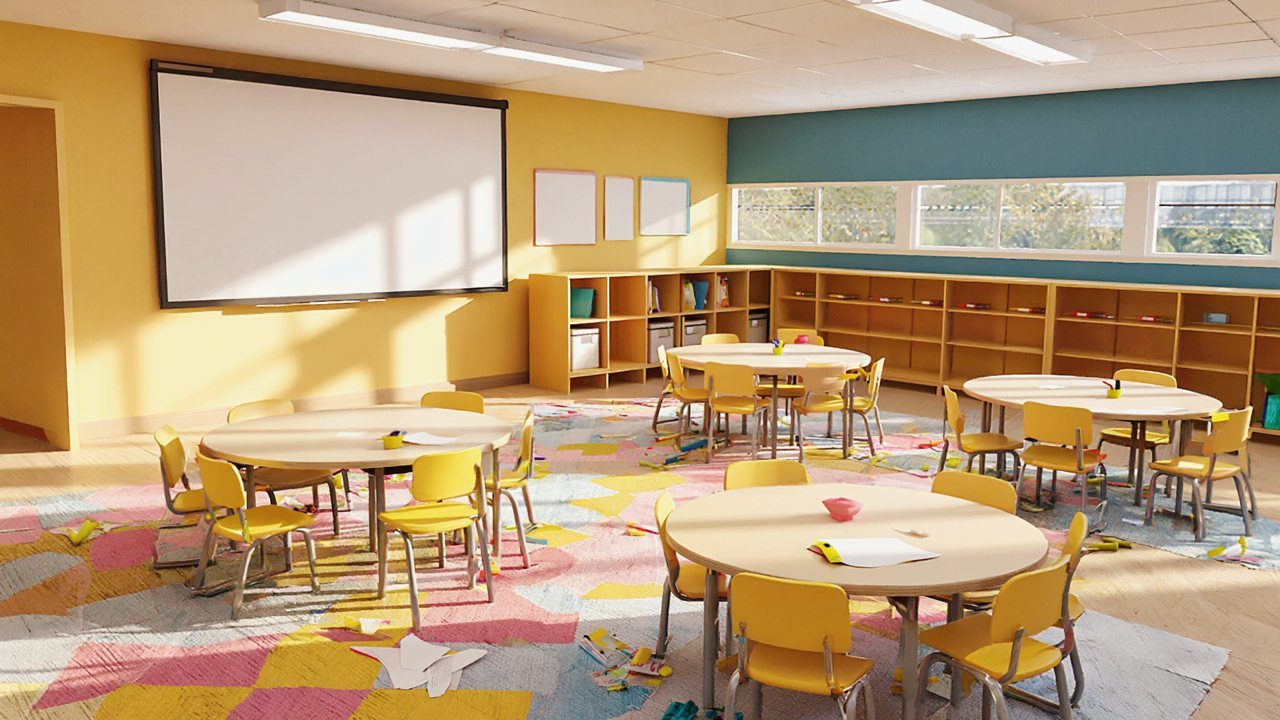
Meet the Code Club
Five friends who each think in their own way, just like real kids.




16 big ideas, one at a time
Each lesson is about 3 minutes and ends with a game to try at home. The lessons follow the CSTA standards for grades 3–5, the same ones many US schools use.
- CPU1
What Is a Computer?
Input, processing, memory and output.
Try at home: Hunt for 5 things at home with a computer inside.
- 1,2,32
Algorithms: Step by Step
An algorithm is a list of steps in the right order.
Try at home: Write the steps for brushing your teeth.
- exact3
Say Exactly What You Mean
Clear, exact, ordered instructions.
Try at home: Program a grown-up to walk to the fridge.
- bug!4
Bugs and Debugging
Find and fix a mistake in a set of steps.
Try at home: Fix the broken paper-airplane steps.
- repeat5
Loops: Do It Again
Use a repeat instead of writing a step again.
Try at home: Make a clap-and-stomp dance: repeat 4 times.
- when6
Events: When This Happens…
Connect an action to a trigger.
Try at home: Play “when I clap, you jump”.
- if7
If This, Then That
Make choices with if, then and else.
Try at home: The weather-and-clothes decision game.
- x = 38
Variables: The Score Box
Store a value that can change.
Try at home: Keep score in a paper “variable” box.
- split9
Break It Down
Split a big problem into small parts.
Try at home: Plan a pretend birthday party in parts.
- pattern10
Spot the Pattern
Find patterns and keep only what matters.
Try at home: Draw a map that shows only what you need.
- 10111
Secret Code: Binary
Count with 1s and 0s using dot cards.
Try at home: Show your age in binary.
- 8×812
Pictures Made of Numbers
A screen picture is a grid of pixels.
Try at home: Colour a grid from number codes.
- sort13
Sorting and Searching
Sort by comparing two at a time; search smartly.
Try at home: Sort spoons by size; play higher or lower.
- net14
How the Internet Works
Messages travel in small numbered packets.
Try at home: Pass a message in numbered pieces.
- go!15
Meet Scratch
Build a first program with events and loops.
Try at home: Make a sprite dance in Scratch, with a grown-up.
- game16
Build Your Own Game
Put sequence, loops, events, if-then and variables together.
Try at home: Remix the Code Club's catch game.
Now in production. Join the list and we'll email you when the first episode is out.
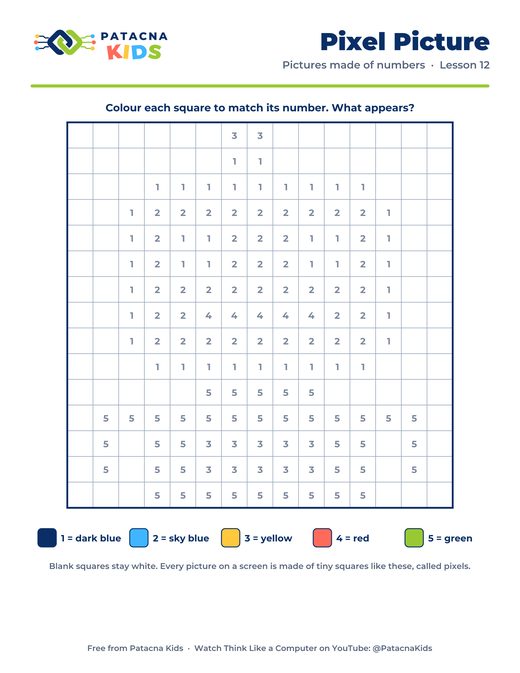
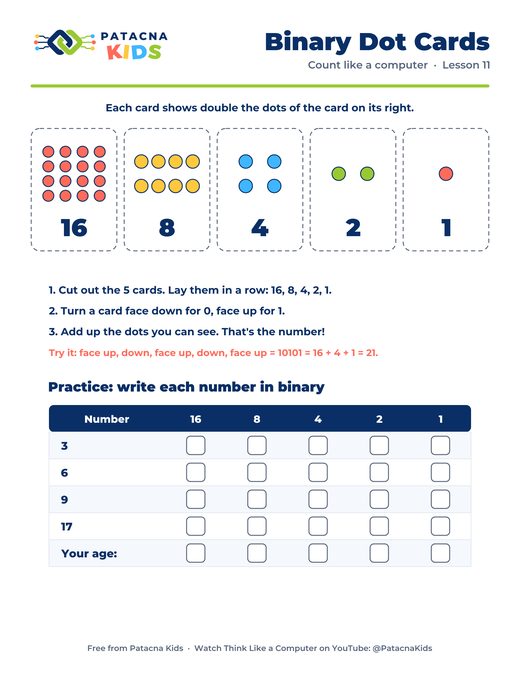
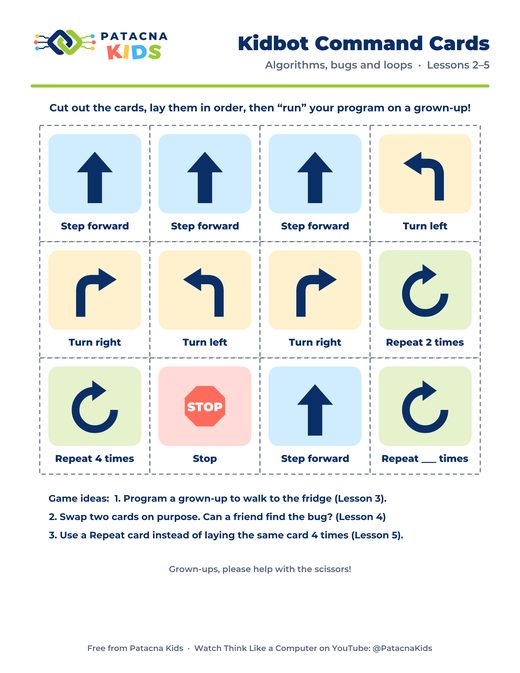
The Code Club Starter Pack
- Binary dot cards: count like a computer, then write your age in binary
- Pixel picture: colour by number to see how screens make pictures
- Kidbot command cards: program a grown-up with arrows and loops